Table Of Content

However, it doesn’t matter what is the type of visual balance you want to use. However, one thing to note is that while asymmetrical balance and off-balance might sound similar, they are two entirely different concepts. In asymmetry, the balance is shifted slightly by altering the perspective. But in discordant or off-balance designs, the balance is shifted so much that it creates a sense of unease and incompleteness in those who view it.
How to Include Balance in Web Designs
The Ear (a) earphones deliver quality noise cancellation for the price, though you'll need to use the default High setting in the app for the best results. In testing, I noticed that slightly adjusting the in-ear fit forces the circuitry to recalibrate. If you don't experience effective noise cancellation at first, try repositioning the earpieces. Tap the Bass Enhance tile to toggle the effect (it’s on by default) and adjust its level (1-5). In testing, this adds a little extra punch and definition to kick drums.
Why is Balance Important in Graphic Design & How to Achieve Balance in Design and Art
Design of super-tough co-continuous PLA/NR/SiO2 TPVs with balanced stiffness-toughness based on reinforced ... - ScienceDirect.com
Design of super-tough co-continuous PLA/NR/SiO2 TPVs with balanced stiffness-toughness based on reinforced ....
Posted: Sat, 08 Sep 2018 07:00:00 GMT [source]
Balance in principles of design refers to the act of distributing the visual elements in a way that makes the design or piece of art seem cohesive. As humans, our minds are better suited to follow order, both visually and otherwise. That is why we often find ourselves attracted to people with symmetrical facial features, or objects that are shaped symmetrically. You can see a great example of this in the image below.
Balanced Incomplete Block Design (BIBD)
For example, the left and right half of a composition could mirror each other, while the top and bottom also mirror each other. Snowflakes show reflection symmetry over more than two axes. When the reflection is a perfect mirror image, the symmetry is said to be pure. Much of the time it won’t be perfect and each side will have slight variations.
The incredible blending of dark colors with lighter ones emphasizes the brand name and makes it stand out. Balance in design doesn’t always mean having equal parts horizontally, vertically, or radially. Another type of balance is asymmetrical, which means having balance without symmetry. This is the opposite of symmetrical balance and is also known as informal balance. The Hubspot website effectively shows this through the use of illustration and text. In the above social media design with asymmetrical balance, the product image is bigger than the ingredient images.
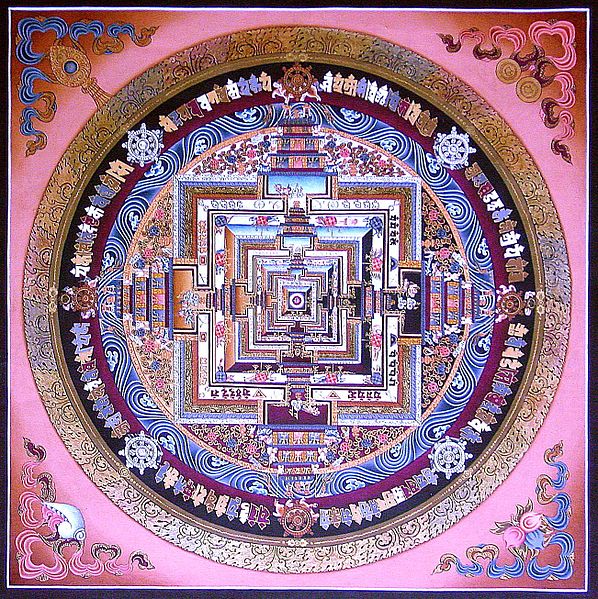
While some of its elements might be focal points and attract your eye, no one area of the composition draws your eye so much that you can’t see the other areas. A somewhat simple way to emphasize specific elements or to add depth to your design is to play with the size of different elements. This brings a visual depth to the overall image, making it have a better impact, while it also is a subtle way to balance the dimensions of various design elements. That is why finding the right balance between intrigue and unease is what dissuades many designers to try to attempt creating designs with a discordant balance. And if you want to incorporate such an idea into your logo design, you need to learn how to design a logo that could use discordant balance in design to its benefit. The concept behind creating a radial balance in your art is to have a strong central element, that draws the gaze immediately.
With mosaic balance, designers can also play with proportion and scale. Even though some elements may be small and some enlarged they will not come across as overpowering when placed together in a busy layout. Here we have two pairs occurring together 2 times and the other four pairs occurring together 0 times. Therefore, this is not a balanced incomplete block design (BIBD).
Elements may be balanced based on color, texture and space to achieve a sense of equilibrium and harmony in a composition. A lack of balance means that individual elements overpower one another and compete for attention, or dominate the page. This might include too much contrast, visual clutter, lack of alignment or blocks of text. But at the end of the day, a lack of balance causes a sense of tension, resulting in a design that’s not so visually appealing. Penji’s graphic designers understand balance in design, you don’t have to worry about doing it yourself. Watch our demo video here or sign up today to get them started on your designs.
Audio engineers make many choices about how to allocate money while designing a product. If you throw enough money at something, you have a pretty good chance of building an exemplary product. Examples of symmetrical designs are corporate logos such as those of Chanel and Starbucks. In other words, see if can patiently read every single piece of information in the ad. The positions of different elements in design affect both balance and hierarchy. Bold chunky prints paired with other bold prints make the whole outfit look noisy.
I started this series to show how all of these principles arise out of human perception and gestalt theory. The principles are based on how we all perceive and interpret our visual environment. Content-heavy websites such as news and magazine websites exhibit mosaic balance as well.
Unless this is the case, designers meticulously maintain balance in their designs as this is what most viewers prefer. With an unbalanced design, there is no clear area of focus. The resulting design does not convey the message you want it to.
This Starbucks logo has these two characteristics aside from its many other appealing elements. Want to create visually balanced informative infographics? Radial balance is established when elements appear to radiate from a central focal point. This method can be used to draw attention to the center of your design. We experience asymmetry in nature too, such as with trees or rock formations.
For each block of the design, use a new colour to colour the edges of a \(K_k\) that connects the points in that block. In fact, careful counting can show that this will result in colouring every edge of the multigraph. Thus, if we know that a design is regular, uniform, and balanced, then the parameters \(r\) and \(b\) can be determined from the parameters \(v\), \(k\), and \(λ\). We therefore often shorten our notation and refer to a BIBD\((v, k, λ)\). A regular design is a design in which every point appears in the same number of blocks, \(r\). A veteran of newsrooms and agencies, Jennifer Gaskin is a writer, editor and designer who is the only living person not to have strong feelings on the Oxford comma.
Read on for an introduction to this principle, including how to strike the perfect balance in your designs. He knew exactly how to place his subjects on a canvas to achieve a desired effect. When designing a product, there are countless parameters that must be considered and balanced to arrive at a final, optimal result. In a traditional design cycle, this is a highly manual process that seeks to reduce the number of variables as much as possible to simplify the process. Regardless of your chosen specialization area, you’ll begin by developing a strong foundation in the fundamentals of graphic design. Degree programs offering a balanced program of instruction in today’s fastest growing fields.


No comments:
Post a Comment